The Charaibeti project, led by our partner Tomorrow’s Foundation to support children with disabilities, reached a major milestone in the first quarter of 2026. Behind our teams’ technical advances lie wonderful human triumphs, such as that of little Umrah.
The Charaibeti Project: Breaking Down the Isolation Faced by People with Disabilities in Low-Income Neighborhoods
In the poorest suburbs and neighborhoods of Kolkata, being born with a physical or mental disability all too often condemns a child to a life of invisibility. Due to a lack of appropriate facilities, financial resources, and social support, these children are unable to attend school and remain cut off from the world, while their families find themselves completely destitute and isolated.
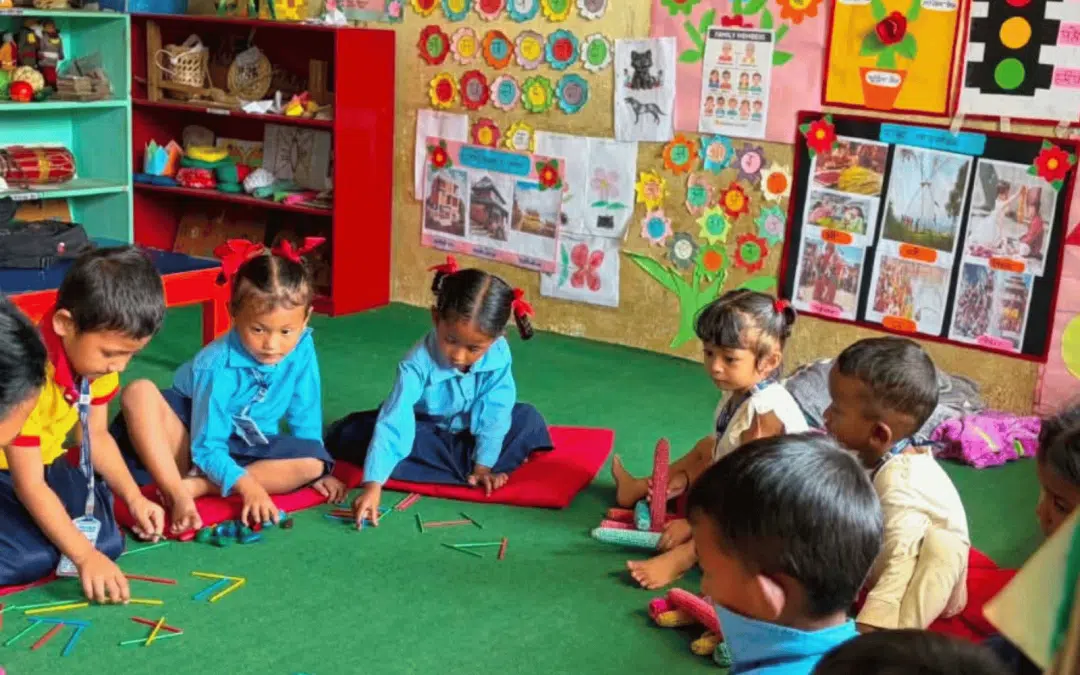
To break this cycle of exclusion, Planète Enfants & Développement supports the Charaibeti project. Its goal is to provide comprehensive support—educational, physical, and administrative—to enable each child to progress at their own pace, gain independence, and, when possible, rejoin the traditional school system.
The Story of Umrah: A Step-by-Step Victory
When Umrah walked through the doors of the Charaibeti Center for the first time, she couldn’t sit up on her own. Every day, her father would carry her in his arms from their home, walking side by side with her mother. The little girl, withdrawn into herself, struggled to interact with those around her.
Two months later, this family’s daily life has changed dramatically. Thanks to daily physical therapy sessions at the center and intensive muscle-strengthening exercises, Umrah is now able to sit upright in a chair with just a little support. Today, she communicates with her eyes, and her bursts of laughter light up the center’s hallways.
Beyond Care: Empowering Mothers
The reason Umrah is making such rapid progress is that her mother has taken an active role in her rehabilitation. That is the whole point of the new program « Mother-Child Training »implemented by the project. Instead of simply dropping off their children, mothers are trained directly by the center's professionals to replicate the physical therapy exercises and stimulation techniques at home.".
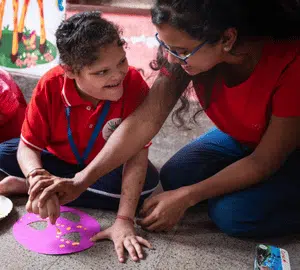
To support these women—who are often isolated and bear a heavy mental burden due to their disabilities—the project has also launched the «Mother Wellness» workshops. These workshops provide a space for listening and psychological well-being that is essential for allowing them to take a breather, share their challenges, and build a peer support network.
A scientific approach and direct access to rights
The start of 2026 marks a major technical overhaul in the field. The teams at Tomorrow’s Foundation are now combining two complementary tools to assess children with extreme precision:
- The FACP Report : Assessing daily independence. This tool helps take stock of what the child can already do in practical terms in their everyday life: Can they eat on their own? Can they express a need? Interact with another child? This provides an accurate picture of their current level of independence.
- The International «Portage» Method» : A step-by-step guide. Once a child’s strengths have been identified, this tool offers a catalog of very simple, progressive exercises. It breaks down the learning process into micro-goals (for example, before learning to hold a pencil, the child will first practice grabbing a large cube, then a small object). It’s the perfect guide for tracking a child’s progress step by step, both at the center and at home with parents.
Thanks to this two-pronged approach, educators develop a customized 100 % enrichment program tailored to each young person’s pace
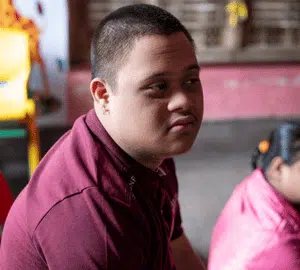
- The UDID Camp, a rights accelerator: Obtaining an official disability card (Unique Disability ID) often involves a complex administrative process in India. To make it easier for families to access their rights, the project organized a community outreach camp in the heart of the neighborhoods where they live. This allowed government doctors to assess the children on-site, enabling dozens of families to obtain the necessary documents and access government assistance.
The Challenges of Tomorrow
The project’s success is creating new challenges: the number of children requiring intensive individual support continues to rise, and the teams must cope with absenteeism due to seasonal illnesses. To address this, the project will step up interventions directly within the homes throughout 2026.
Did you know?
To provide the best possible support for the children, educators and social workers completed specialized training on autism spectrum disorders, provided by the West Bengal Autism Society.