On the occasion of the European Day Against Human Trafficking on October 18, let us remember that this scourge still affects many families around the world and let us shine a light on those who are taking action to combat it.
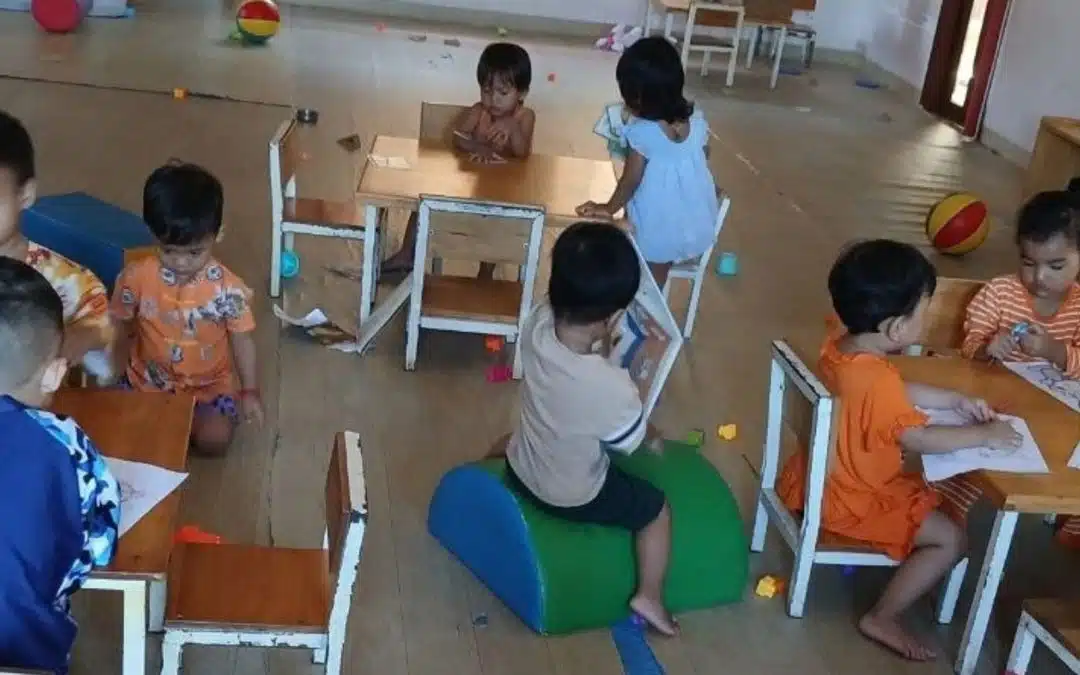
Characterized by two-speed development, Vietnam, Cambodia, Laos, and the Philippines are facing socioeconomic crises that continue to weaken the most vulnerable households and increasingly expose children to the risks of trafficking, exploitation, and violence.
In South Asia, 181 million children still live in an environment where poverty, household debt, migration, economic crises, and social inequalities are intertwined*.
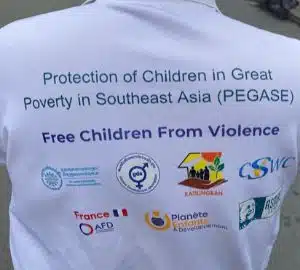
It is in this context that the PEGASE program—Protection of Children in Extreme Vulnerability in Southeast Asia—provides individualized, personalized support to families to prevent or find solutions to the exploitation or trafficking of children.
Ho Chi Minh City, a city of skyscrapers in southern Vietnam, is not immune to the exploitation, trafficking, and abuse of children.
Thursday, July 9. During their visit to a family under our care, I joined a social worker, a social work expert, and the principal of the charity school where the youngest child attends. Support services have been mobilized; the family is receptive and warmly welcomes us into their small home.
The oldest son, 16, has been working on construction sites alongside his father for several years to help support the family and pay for his mother’s medical care. The conditions are harsh, the work sites are dangerous, and the workdays are long in the stifling heat. Education takes a back seat—if not fifth or sixth priority—and social connections with other teenagers their age are virtually nonexistent… The project’s psychosocial support thus appears as a glimmer of hope.
Supporting families means listening to them, but above all, providing them with tools, solutions, and resources to help them address their challenges as effectively as possible. That’s where PEGASE really comes into its own.
To support this family, the project’s social workers are offering concrete solutions: referring the young boy to a free vocational training program to prepare him for a less dangerous trade that requires specific skills, thereby enabling him to earn a higher salary and enjoy a better quality of life. This solution may seem simple, yet it entails a reduction in the family’s income, the son’s departure for a few months, and complex administrative procedures. That is why individualized, personalized support from social workers is essential. It is crucial to explain to them that child labor is not the solution, that a secure future depends on education, and that their loss of income can be managed through proper budgeting.
Through a mother’s story, learn about the challenges families may face and the impact these hardships can have on children’s futures and safety.
> To learn more about the program to combat child trafficking and exploitation in Southeast Asia (PEGASE):
* UNICEF data.