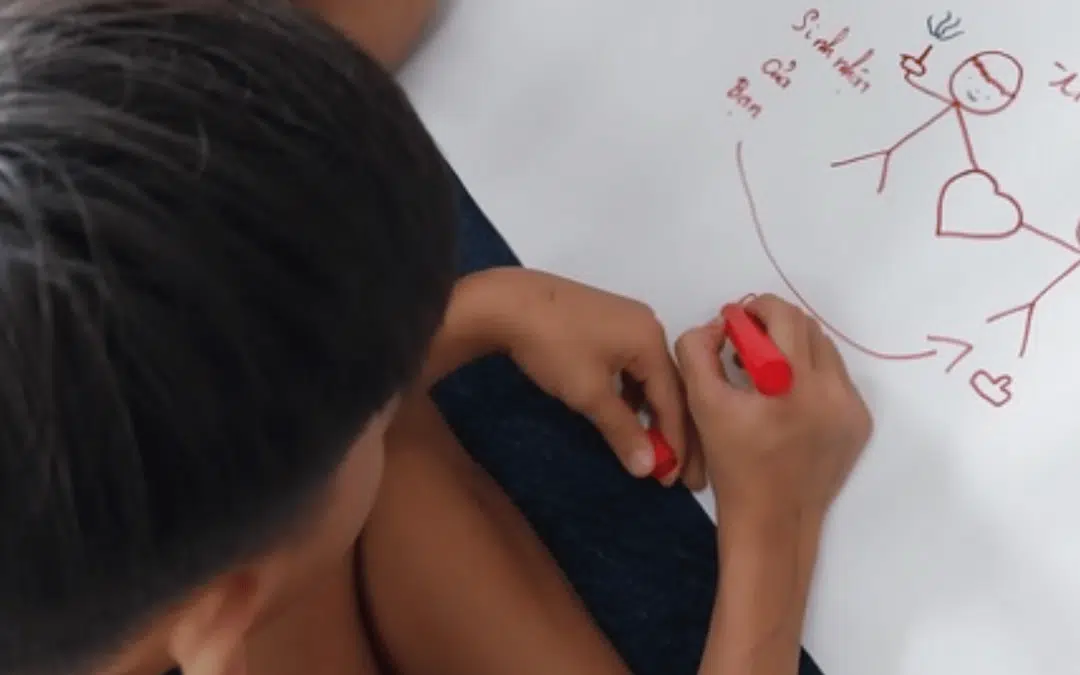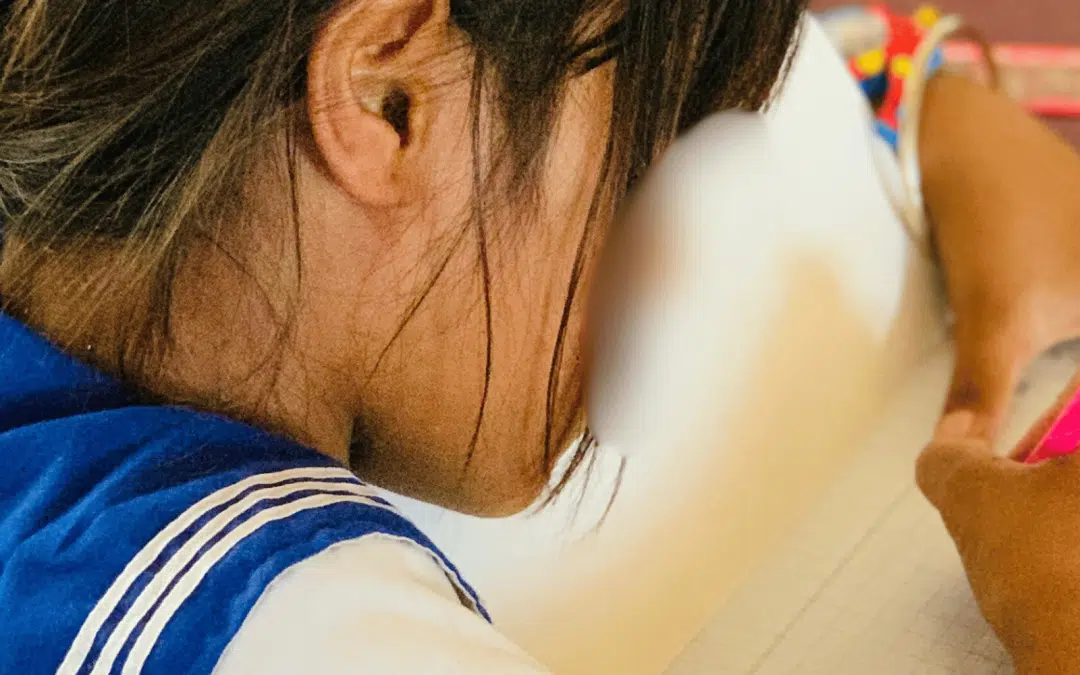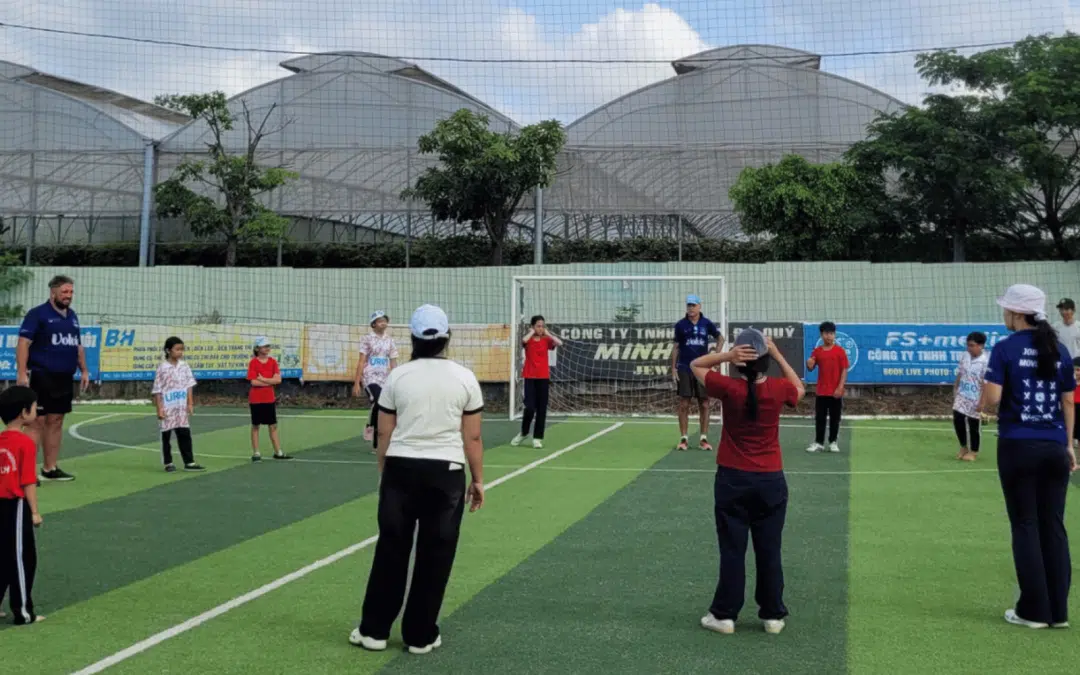
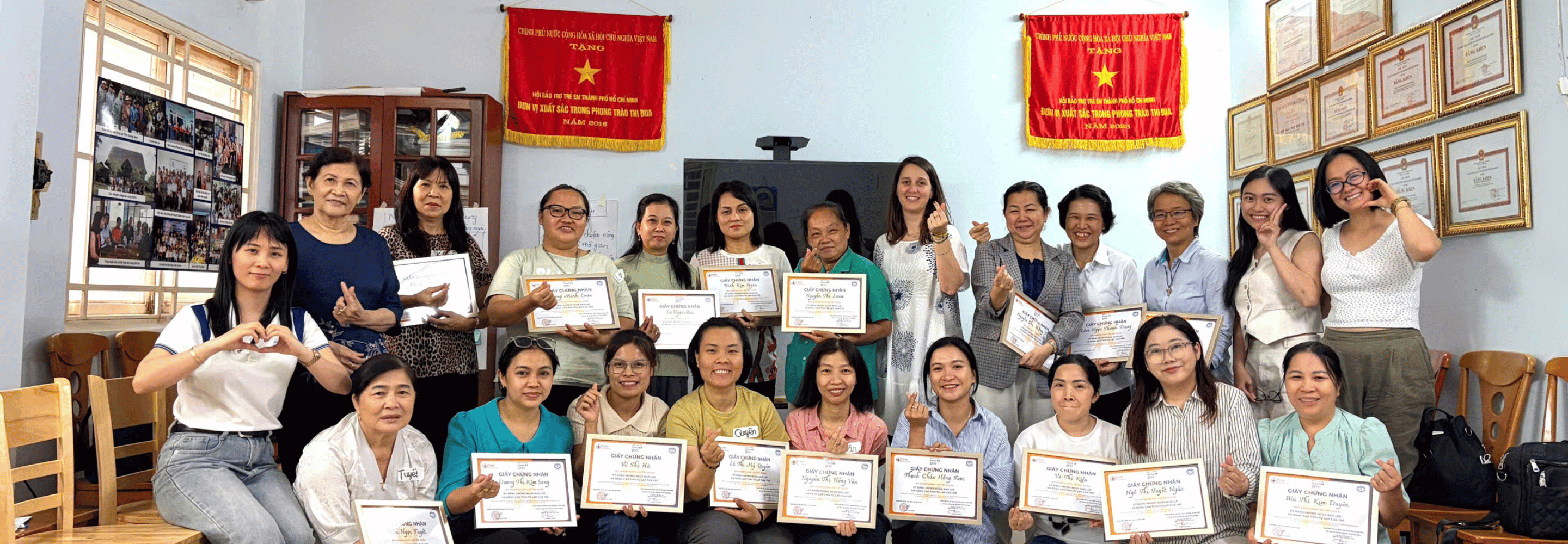
A second training session on Ordinary Educational Violence (VEO), led by Nolwenn Deschard, our early childhood expert, was held in Hô Chi Minh-Ville, Vietnam. It brought together 17 professionals and carers working in charity schools and orphanages. While the first session was aimed at defining and raising awareness of such violence, this new stage focused on the deconstructing habits and the search for alternatives.
Breaking down the everyday to do things differently
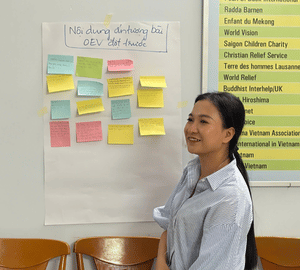
During the training course, participants exposed their practices and habits, and analysed them. For example, they analyzed expressions such as «Thương cho roi cho vọt», a proverb that corresponds to the famous «who loves well spoil well».
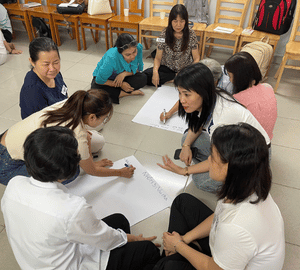
To change behavior, it is essential to identify everyday situations and name them. The training was based on very concrete tools:
- The image of the «red» and «green» brain: under the stress of shouting or threats, a part of the child's brain (the amygdala) becomes highly active and switches to «red». The child then goes into «survival» mode, making it impossible to understand instructions or learn. Conversely, for a child to learn and cooperate, he or she needs a «green» brain, i.e. a calm, secure environment provided by the adult.
- Practical exercises: participants worked with card games to learn how to transform a classic reaction (threat, blackmail) into a positive, caring instruction, adapted to toddlers.
Awareness and challenges
In many situations, we see that adults have not assimilated certain practices to violence, and that they sincerely believe they are doing the right thing in educating the child. Training reminds us of an essential point: using means such as the screams, the threat or humiliation, even in the name of education, remains violence. The aim is not to point the finger at any one practice, but to look at things through the eyes of the needs, development and effects these practices have on the child.
The results of this new training session are encouraging in terms of awareness.
However, the transition to practice and the abandonment of old reflexes takes time. Some adults have honestly testified to the difficulty of changing an entire system. In fact, it can sometimes be very complicated to keep control of one's own emotions in certain tense situations, such as at mealtimes (when adults have the reflex of forcing the child to finish his plate in the name of his “good”) or when faced with a child who doesn't listen.
A universal subject
These testimonies and difficulties remind us just how universal the subject of Ordinary Educational Violence is. The difficulty of changing one's outlook knows no boundaries.
In France, for example, we had to wait the 2019 law so that VEO are officially banned. Historically, many parents have considered education to be strictly a private matter, the intimacy of the home, and claimed that it was their own business. Many parents often find themselves on their own: how else can they make their children obey them? With no concrete answers, no explanations of children's natural development and no professionals to guide them on a daily basis, families find themselves at a loss to replace punishment with support.
Fortunately, this is not a foregone conclusion, and things are changing. And that's precisely where the importance of a long-term, structured support. Thanks to practical training courses like Nolwenn's, set up in the field by Planète Enfants & Développement, things can really change. By giving professionals and families understandable keys to decoding children's emotions and defusing conflicts, These initiatives are gradually transforming educational reflexes. This is why this work of raising awareness and transmitting that we can at last offer children a secure environment, essential to their development. their full development.